
Explainer · July 1, 2026 · 6 min · By Noor El-Amin
Melasma in Beverly Hills: Why the Wrong Laser Makes It Worse, and What Actually Clears It
Melasma is the pigment problem most likely to be treated badly in a sunny, laser-happy market. Here is how the condition works, why aggressive devices can backfire, and the layered approach dermatologists actually trust.
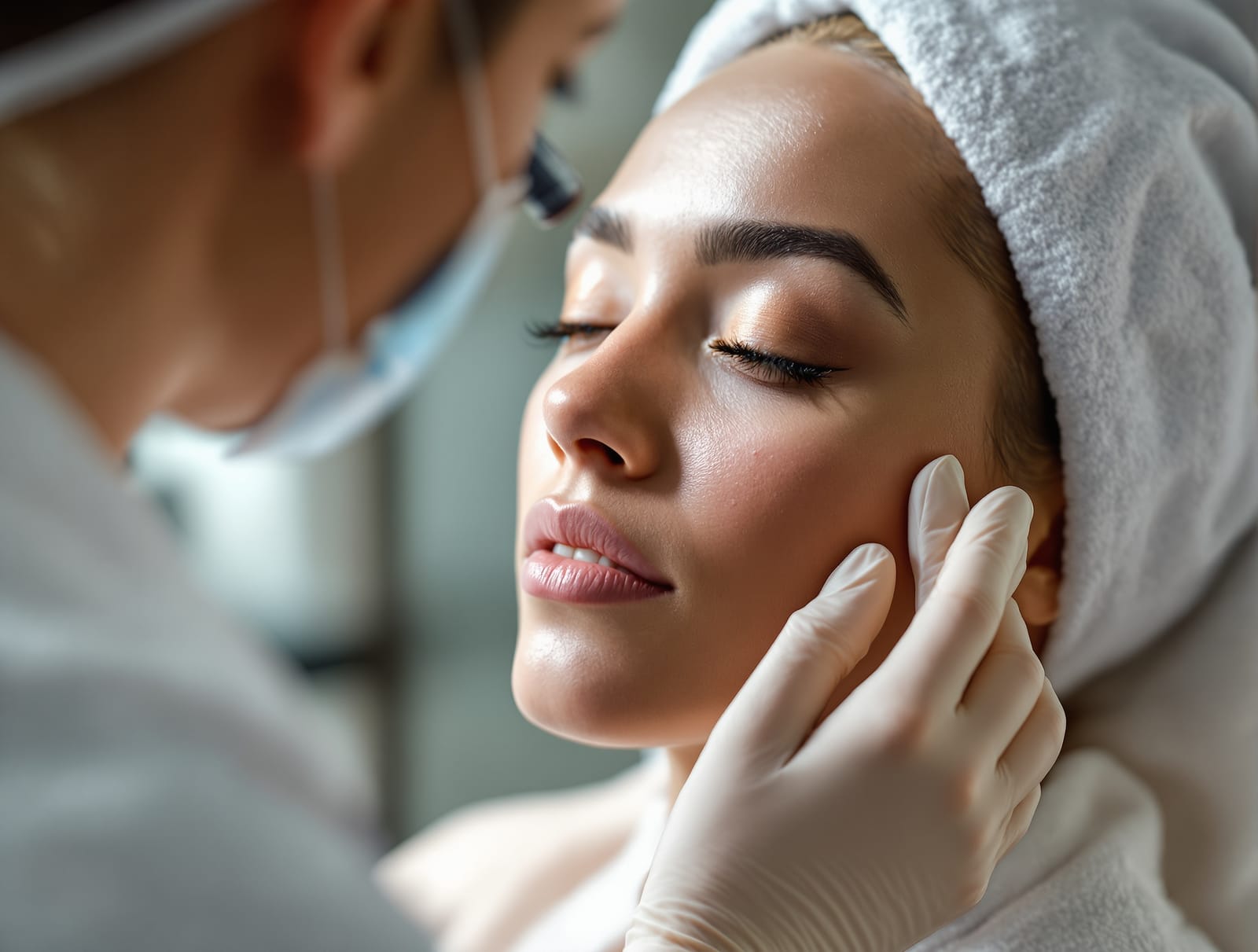
Melasma is the single most misunderstood pigment problem walking into Southern California dermatology offices, and in a market saturated with laser marketing it is also the one most likely to be treated in a way that makes it worse. Understanding why requires understanding what melasma actually is, because the biology explains almost every treatment failure.
What melasma really is. Melasma is a chronic disorder of pigment production, not a stain sitting on the surface. According to the American Academy of Dermatology, it appears as symmetric brown or gray-brown patches, usually on the cheeks, forehead, upper lip, and bridge of the nose, and it disproportionately affects women and people with medium to deep skin tones. The pigment comes from melanocytes, the cells that manufacture melanin, which in melasma are hyperactive and overproducing. Crucially, the pigment sits at multiple depths: some in the upper epidermis, some deeper in the dermis, and often both at once. That mixed depth is why a single device rarely solves it, and why depth-blind treatment so often disappoints.
Why it is so common here. The three biggest drivers of melasma are ultraviolet exposure, visible light, and hormones. The National Institutes of Health literature consistently identifies sun exposure as the dominant modifiable trigger, and Southern California delivers year-round UV plus a great deal of visible light, the part of the spectrum that ordinary sunscreens do not block. Add pregnancy, oral contraceptives, and hormone therapy, and Los Angeles becomes close to a perfect environment for melasma to appear and to relapse. This is also why the condition is best described as managed rather than cured.
The laser trap. Here is the counterintuitive part that patients in a device-forward market need to hear plainly. Aggressive lasers, particularly ablative resurfacing and high-energy intense pulsed light, can trigger a rebound worse than the original patches. The mechanism is straightforward: melanocytes in melasma are already irritable, and heat is an injury. Injure them and they can respond with a surge of pigment, a phenomenon called post-inflammatory hyperpigmentation, which in darker skin tones can be both severe and long-lasting. The Mayo Clinic and the American Academy of Dermatology both caution that laser and light devices are not first-line for melasma and can worsen it. This does not mean every laser is off the table. It means device selection, energy settings, and operator judgment matter enormously, and that a clinic pushing an expensive resurfacing package as the opening move is a warning sign rather than a solution.
What actually works, in order. The evidence-based sequence starts unglamorously. First is rigorous photoprotection, because without it every other treatment is temporary. That means a broad-spectrum tinted mineral sunscreen with iron oxides, which block the visible light that ordinary chemical sunscreens miss, reapplied through the day and paired with shade and hats. This is the same discipline covered in our SPF routine for Southern California, and for melasma it is not optional. Second is topical therapy. The long-standing gold standard is a combination of hydroquinone, a retinoid, and a low-dose topical steroid, used in supervised cycles rather than indefinitely. Non-hydroquinone options such as azelaic acid, tranexamic acid, cysteamine, and kojic acid have a growing evidence base and are useful for maintenance or for patients who cannot tolerate hydroquinone.
Oral and procedural add-ons, used carefully. For stubborn cases, oral tranexamic acid has become a genuinely important tool. A body of dermatology research, including trials summarized by the AAD, shows meaningful improvement in moderate to severe melasma, though it requires screening because it is a clot-modifying medication and is not appropriate for everyone. Only after topical control is established do careful practitioners consider gentle procedures: superficial chemical peels, low-fluence Q-switched or picosecond lasers in expert hands, and non-aggressive microneedling to enhance topical penetration. The unifying principle is restraint. Melasma rewards patience and punishes force.
Setting honest expectations. Melasma is chronic. Even a well-run plan aims for substantial fading and long remission, not permanent erasure, and relapse is common after sun exposure, pregnancy, or stopping maintenance. That reality is a feature of a good consultation, not a failure of one. The same evidence-over-marketing lens applies to most cosmetic pigment and aging concerns, a theme we return to in what actually works for anti-aging in LA, and it is exactly the kind of case where the line between cosmetic and medical dermatology blurs, because melasma is a medical diagnosis with cosmetic consequences.
How to vet a provider. Ask whether the plan starts with sun protection and topicals before any device. Ask specifically how the clinic manages post-inflammatory hyperpigmentation in your skin tone, and whether they use test spots at conservative settings before treating the whole face. Ask what the maintenance plan looks like a year out, because a provider who only sells the first three months has not understood the disease. A dermatologist who talks you out of the most aggressive option is usually the one who understands melasma best.
Related reading: An SPF routine for Southern California.
More in Explainer
View all →- RF Microneedling vs. Traditional Microneedling: What the Energy Actually Adds
- Why Melasma Often Gets Worse After Laser, and What Actually Works
- Ultrasound Before the Syringe: Why Beverly Hills Injectors Are Mapping Faces First
- Fillers That Fill vs. Fillers That Build: How Biostimulatory Injectables Actually Work