
Field Notes · June 4, 2026 · 5 min · By Ingrid Pavlenko
An SPF routine for Southern California
The dermatologist consensus on daily SPF in a UV-heavy market, and the practices clinicians actually follow themselves.
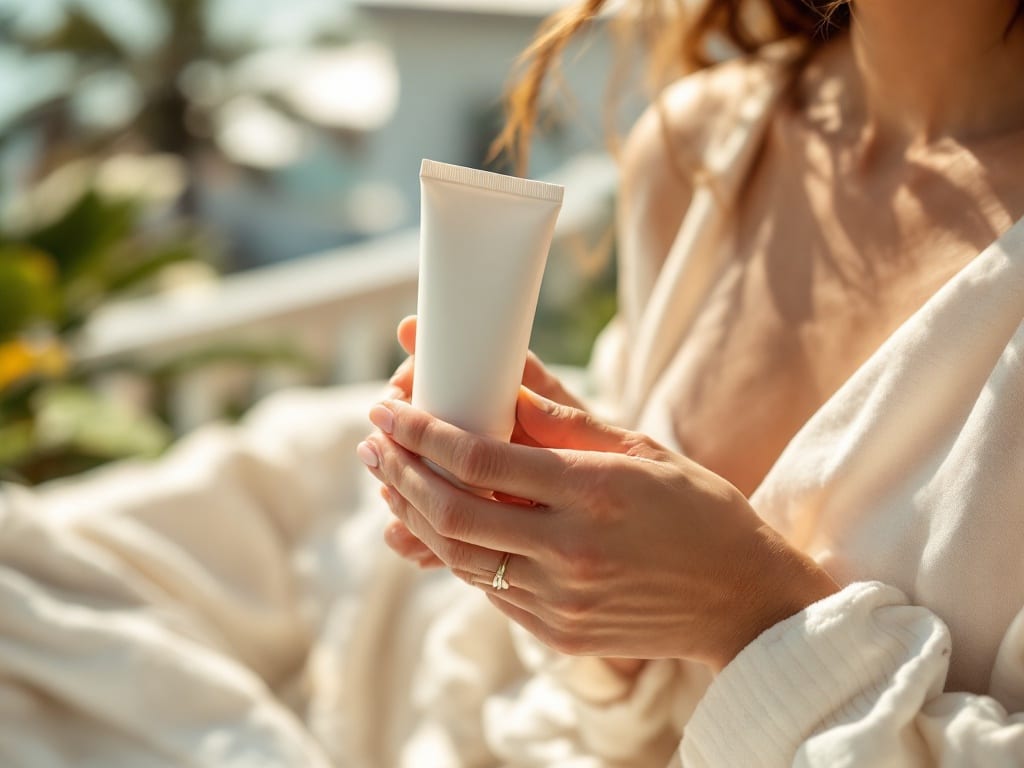
Ask a room of dermatologists which product on their shelf they would keep if allowed only one, and the answer is boring and unanimous: sunscreen. In Southern California, where meaningful ultraviolet exposure runs essentially year-round, photoprotection is not a beach behavior. It is a daily discipline, and the gap between knowing that and practicing it is where most of this region's visible aging and a good share of its skin cancer originates.
The dose nobody applies. The American Academy of Dermatology recommends a broad-spectrum sunscreen of SPF 30 or higher on all exposed skin, every day, reapplied roughly every two hours during ongoing exposure. The standard adult face-and-neck dose is about a quarter teaspoon, and studies consistently find real-world users applying a fraction of it, which quietly converts an SPF 50 label into far weaker protection. The first upgrade to any routine is not a new product; it is the full amount of the current one.
Mineral, chemical, and the tint question. Chemical filters absorb UV; mineral filters, zinc oxide and titanium dioxide, absorb and scatter it while sitting more gently on reactive skin. Both work when applied properly, and the AAD endorses either; the best sunscreen remains the one you will actually wear daily. The nuance that matters most locally is visible light. Ordinary sunscreens of both types do little against it, and visible light is a proven driver of pigment problems in medium and deep skin tones, including the melasma relapses we documented in our melasma investigation. The fix is a tinted mineral formula, because the iron oxides that create the tint are what block visible light. For anyone managing pigment, tinted is not a cosmetic preference; it is the mechanism.
The car, the office window, the hike at four. Southern California's UV pattern rewards specific habits. UVA passes through window glass, which is why years of commuting print themselves on the right side of American drivers' faces; sunscreen before the drive, not after arriving, addresses it. UV index here typically stays high enough to matter from mid-morning through late afternoon for most of the year, so the daily application belongs in the morning routine as fixedly as toothpaste. And incidental exposure, the patio lunch, the sideline of a kid's game, the golden-hour hike, accumulates faster than any beach day because nobody counts it.
What clinicians actually do. The pattern among dermatologists themselves is instructive and cheap. A tinted mineral SPF as the last skincare step every morning. A powder or stick SPF kept in the car or bag for midday reapplication over makeup. Hats with real brims and UV-blocking sunglasses treated as equipment, not accessories. Shade-seeking between roughly ten and two, when the UV index peaks. And almost none of them use tanning as a verb. The routine pairs with a nightly retinoid, the combination we unpacked in our retinoid reality check, because sunscreen protects the collagen that the retinoid is busy rebuilding.
The payoff, stated plainly. Daily photoprotection slows measurable photoaging, reduces the incidence of the precancerous lesions that become skin cancers, and protects every dollar spent downstream on lasers, injectables, and prescriptions. It is also the only item on the entire anti-aging menu with no downtime, no complications, and no skill dependence. The rest of skin care in this city is negotiable. This part is not, and the annual check that backstops it, described in our guide to full-body skin exams, completes the only two-line insurance policy dermatology has ever offered.
Related reading: Inside a full-body skin check.