
Explainer · July 18, 2026 · 6 min · By Noor El-Amin
Hair Loss in Beverly Hills: What Actually Regrows Hair and What Just Sells Hope
Thinning hair is one of the most common and most mistreated reasons people visit a dermatologist. Here is how pattern hair loss works, the two treatments with real evidence, and where the expensive add-ons stop making sense.
Hair loss is the dermatology complaint people research for months before they say a word to a doctor, and the delay usually costs them more than money. Follicles that have quietly shrunk for years respond far less than follicles caught early, so the same market that sells thousand-dollar serums for aging faces also runs a brisk trade in hair products bought too late to matter. In a neighborhood fluent in appearances, thinning hair is one of the quietest common reasons people walk into a dermatology office, and one of the most mistreated. Understanding the biology is what separates the treatments that regrow hair from the ones that only sell hope.
What is actually happening on your scalp. The large majority of hair loss in adults is androgenetic alopecia, the pattern thinning also called male or female pattern hair loss. It is genetic and hormonally mediated: in susceptible follicles, a derivative of testosterone called dihydrotestosterone, or DHT, gradually shrinks the follicle across successive growth cycles. Each cycle produces a finer, shorter, lighter hair until the follicle effectively stops. According to MedlinePlus, pattern loss accounts for most hair thinning and tends to follow predictable maps: a receding hairline and crown in men, a widening part with a preserved frontal hairline in many women. The practical point buried in that biology is timing. A miniaturized follicle can often be coaxed back to producing a usable hair. A follicle that has been dormant for a decade usually cannot. Early is close to the entire game.
The two treatments with real evidence. Two therapies have the kind of repeated, controlled trial data that the rest of the category envies, and both are inexpensive relative to what surrounds them on a Beverly Hills menu. The first is topical minoxidil. Originally a blood pressure drug, it was found to prolong the growth phase of the hair cycle and enlarge miniaturized follicles, and the American Academy of Dermatology lists it among the first-line options in its hair loss treatment guidance. It works for both men and women, it is available over the counter as a liquid or foam, and a low-dose oral form is increasingly prescribed off label under supervision for people who cannot tolerate the topical. The honest caveats: it takes four to six months to show anything, results fade if you stop, and many users see an early shed in the first weeks that is a sign of cycling follicles, not a reason to quit.
Finasteride, and the conversation it deserves. The second evidence-backed drug is finasteride, an oral medication that blocks the enzyme converting testosterone to DHT and therefore attacks the mechanism upstream. The Mayo Clinic describes it as an effective option for male pattern loss, often slowing shedding and producing modest regrowth in a majority of men who stay on it. It is not for everyone. A minority of users report sexual side effects, the drug is not used in men who may father children without discussion, and it is generally avoided in women who are or may become pregnant because of a risk to a male fetus. Some dermatologists now prescribe it topically or at low oral doses to reduce systemic exposure. The point is not that finasteride is right for you. It is that a mechanism-level drug belongs in the conversation before anyone upsells a series of injections.
The procedures worth understanding, and their real place. Above the two proven drugs sits a tier of procedures that range from reasonable adjuncts to expensive theater. Platelet-rich plasma, or PRP, involves drawing your blood, concentrating the platelets, and injecting them into the scalp on the theory that growth factors stimulate follicles. The evidence is genuinely promising but still uneven, the protocols are not standardized, and it requires a maintenance schedule that adds up quickly in this zip code. Low-level laser devices, sold as caps and combs, have modest supporting data and are low-risk, which is a fair description of a low-ceiling treatment. Microneedling shows some benefit mostly as a way to enhance minoxidil penetration rather than as a stand-alone fix. Hair transplant surgery, which relocates DHT-resistant follicles from the back of the scalp to thinning zones, is the one procedure that can produce dramatic permanent change, but it works best when the underlying loss is already stabilized on medication, and a surgeon who skips that step is setting up an unnatural result as the untreated areas keep thinning.
Where the marketing outruns the biology. This is the category the luxury market loves, because hope sells at a premium. Biotin supplements are the clearest example: unless you have a genuine and rare biotin deficiency, the vitamin does nothing for pattern hair loss, and high doses can distort certain lab tests. Thickening shampoos coat the hair shaft for a temporary cosmetic effect and treat no follicle. Exosome scalp treatments are marketed aggressively and priced accordingly, but they remain investigational, and the same evidence-over-ambience lens we apply across the anti-aging menu applies here in full. A useful filter: ask whether a product has been shown to regrow hair in a controlled trial, or only to make hair look temporarily fuller. The difference is the entire purchase.
When hair loss is a medical signal, not a cosmetic one. Not all shedding is pattern loss, and this is where a rushed cosmetic setting can miss something that matters. Sudden diffuse shedding a few months after childbirth, surgery, a crash diet, a severe illness, or significant stress is usually telogen effluvium, which is often self-limited once the trigger passes. Round, smooth bald patches can be alopecia areata, an autoimmune condition. Redness, scaling, itching, or a loss of the normal follicle openings can signal a scarring alopecia, which is a genuine emergency for the follicle because that damage is permanent if untreated. Thyroid disorders, low iron, and certain medications also drive hair loss, which is why a real workup can include blood tests rather than a straight jump to a serum. This is exactly the terrain where the line between cosmetic and medical dermatology blurs, and where being examined by a diagnostician rather than sold a package genuinely changes the outcome.
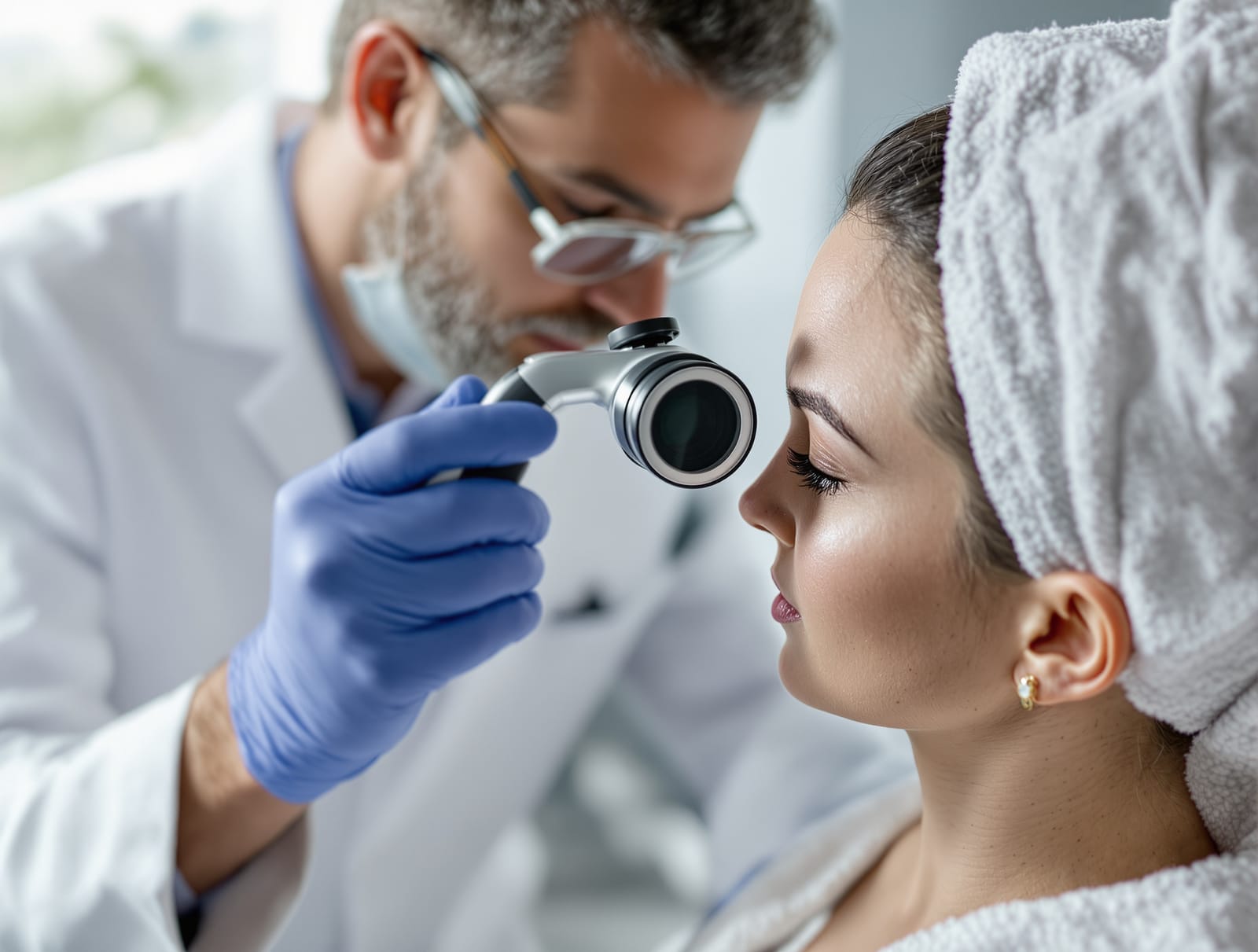
What a good consultation looks like. A thorough hair loss appointment takes a history, looks at the scalp closely, sometimes with a handheld magnifier or a pull test, and considers whether labs are warranted before committing to a plan. It sets the timeline honestly, because every credible treatment here is measured in months, not weeks. It starts with the proven, inexpensive options and reserves procedures for cases and budgets where they add something the drugs cannot. And it prices the full arc, not just the first visit, the same discipline worth applying to what a Beverly Hills dermatologist actually costs. A provider who reaches for a costly injection series before mentioning minoxidil is answering a question about revenue, not about your follicles.
The bottom line. Pattern hair loss is common, it is partly treatable, and the treatments that work best are also among the cheapest, provided you start before the follicles have given up. The luxury layer above them is not all worthless, but almost none of it belongs at the front of the plan. Buy the mechanism, not the marble counter, and see someone whose first move is to look rather than to sell.
Related reading: What actually works for anti-aging in LA.
More in Explainer
View all →- RF Microneedling vs. Traditional Microneedling: What the Energy Actually Adds
- Why Melasma Often Gets Worse After Laser, and What Actually Works
- Ultrasound Before the Syringe: Why Beverly Hills Injectors Are Mapping Faces First
- Fillers That Fill vs. Fillers That Build: How Biostimulatory Injectables Actually Work