
Explainer · July 16, 2026 · 6 min · By Noor El-Amin
Botox for Sweating: What Hyperhidrosis Treatment in Beverly Hills Actually Involves
The same injection famous for softening frown lines is one of the most effective medical treatments for excessive sweating. Here is how it works on overactive sweat glands, what the treatment day looks like, and where it sits on the ladder of options.
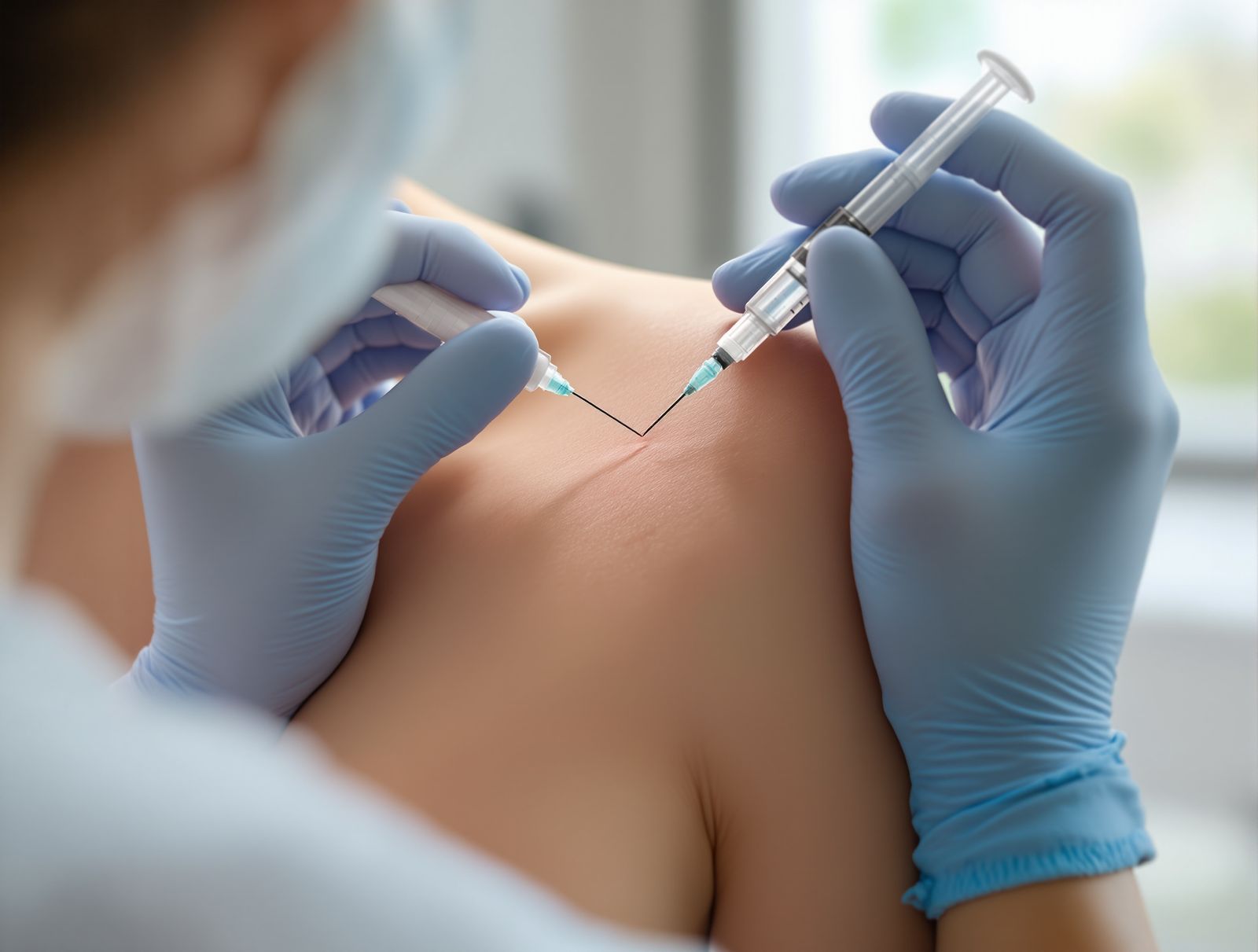
For a city that spends a fortune on looking effortless, one of the least discussed conditions in Beverly Hills dermatology is also one of the most quietly disruptive: sweating that has nothing to do with heat or exertion. Primary focal hyperhidrosis, the medical term for excessive sweating in specific areas such as the underarms, palms, soles, and scalp, affects an estimated five percent of people, and for many of them it dictates wardrobe choices, handshakes, and confidence in ways a warm climate only sharpens. The encouraging part is that it is highly treatable, and the most familiar tool in the aesthetic cabinet turns out to be one of the most effective medical treatments for it.
What hyperhidrosis actually is. Sweat is produced by eccrine glands, which take their orders from the sympathetic nervous system. In primary focal hyperhidrosis the glands themselves are normal; the nerve signals telling them to fire are simply overactive, so the body sweats far beyond what temperature regulation requires. According to the Mayo Clinic, the condition usually begins in childhood or adolescence, often runs in families, and is not caused by anxiety, though the two feed each other in an obvious loop. This is the distinction a careful clinician draws first: primary focal hyperhidrosis is localized and idiopathic, while secondary hyperhidrosis is generalized sweating driven by an underlying cause such as thyroid disease, medication, infection, or menopause. Sweating that is new in adulthood, whole-body, or worst at night deserves a workup before anyone reaches for a needle.
Where Botox fits, and why it works. Botulinum toxin is best known for relaxing the muscles that etch expression lines, the mechanism we unpacked in our reporting on preventative botox. For sweating it exploits the same chemistry against a different target. The toxin blocks the release of acetylcholine, the chemical messenger the nerve uses to switch a gland on. Injected into the skin rather than the muscle, it interrupts the signal to the eccrine glands in that patch of skin, and the sweating stops where the drug lands. The American Academy of Dermatology notes in its hyperhidrosis guidance that onabotulinumtoxinA carries a specific regulatory clearance for severe underarm sweating that antiperspirants cannot control, which is why the treatment is standard rather than experimental.
The treatment day, described honestly. For underarms the physician often begins with a starch-iodine test, painting the skin so the sweating zones turn dark and map themselves. The area is then injected in a grid of small, shallow blebs, roughly fifteen to twenty per underarm, using a very fine needle. The whole appointment usually takes under half an hour, requires no downtime, and lets you drive yourself back to work. Results are not instant: most people notice dryness within two to four days and the full effect by two weeks. Duration is the headline benefit. Underarm results commonly last four to twelve months, frequently around six, and the International Hyperhidrosis Society reports comparable durability, after which the treatment is simply repeated.
Palms and soles are a harder conversation. The hands and feet respond to the same drug, but two things change. First, injections into the palm are genuinely uncomfortable, so many practices use a nerve block or vibration and cooling to make them tolerable. Second, results on the hands tend to last a shorter time than the underarms. There is also a specific caution for palms: because the same small hand muscles that grip are nearby, a small number of patients notice temporary weakness in pinch or grip strength, which matters more for a surgeon or a pianist than for most people. A good injector raises this before you ask.
Where it sits on the ladder. Botox is rarely the first thing tried, and it should not be. The evidence-based sequence starts with clinical-strength antiperspirants containing aluminum chloride, applied at night to dry skin, which resolve many mild cases on their own. Prescription topical wipes containing glycopyrronium are a newer step. Iontophoresis, a device that passes a mild electrical current through water, works well for hands and feet but demands ongoing sessions. Oral anticholinergic medications reduce sweating everywhere but bring dry mouth and other systemic side effects. For permanent underarm reduction there is a microwave-based device, and for the most severe refractory cases a surgical nerve procedure exists but carries a real risk of compensatory sweating elsewhere. Botox occupies the useful middle: more durable and targeted than topicals, far less drastic and irreversible than surgery.
The insurance wrinkle patients miss. Hyperhidrosis is a medical diagnosis, not a cosmetic preference, which places it on the insurance-billable side of the line this publication mapped in cosmetic versus medical dermatology. Many plans cover Botox for severe underarm sweating once a patient has documented that prescription antiperspirants failed, which changes the math considerably. Out of pocket, treatment in this market runs into the high hundreds or low thousands per session depending on the area and the number of units, so the coverage question is worth settling in writing before the appointment, the same discipline we recommend for every line item in what a Beverly Hills dermatologist actually costs.
How to vet the provider. Ask whether the clinician has ruled out secondary causes, especially if your sweating is generalized or recent. Ask how many units they typically use per area and how they manage the discomfort of palm or sole injections. Ask what happens if a small patch keeps sweating, since minor touch-ups at two weeks are normal and a competent practice plans for them. And confirm the injector is a physician or is supervised by one, because while the procedure is low-risk, the anatomy of the hand rewards someone who knows exactly where the muscles sit.
The bottom line. Excessive sweating is common, treatable, and badly underdiscussed, and botulinum toxin is one of the most reliable tools for it, working not on muscle but on the nerve signal to the sweat gland. Started after simpler measures and placed by careful hands, it can turn a daily source of anxiety into a twice-a-year appointment. In a specialty crowded with treatments that promise more than they deliver, this is the rarer thing: a well-evidenced fix for a real problem.
Related reading: Preventative botox at 25.
More in Explainer
View all →- RF Microneedling vs. Traditional Microneedling: What the Energy Actually Adds
- Why Melasma Often Gets Worse After Laser, and What Actually Works
- Ultrasound Before the Syringe: Why Beverly Hills Injectors Are Mapping Faces First
- Fillers That Fill vs. Fillers That Build: How Biostimulatory Injectables Actually Work