
Explainer · July 2, 2026 · 6 min · By Noor El-Amin
Decoding the Beverly Hills Laser Menu: CO2, Erbium, Fraxel, and BBL, Compared Honestly
Every clinic on the Golden Triangle sells a laser with a different name and the same promise. Here is what each device actually does to skin, who each one suits, and the downtime nobody puts on the brochure.
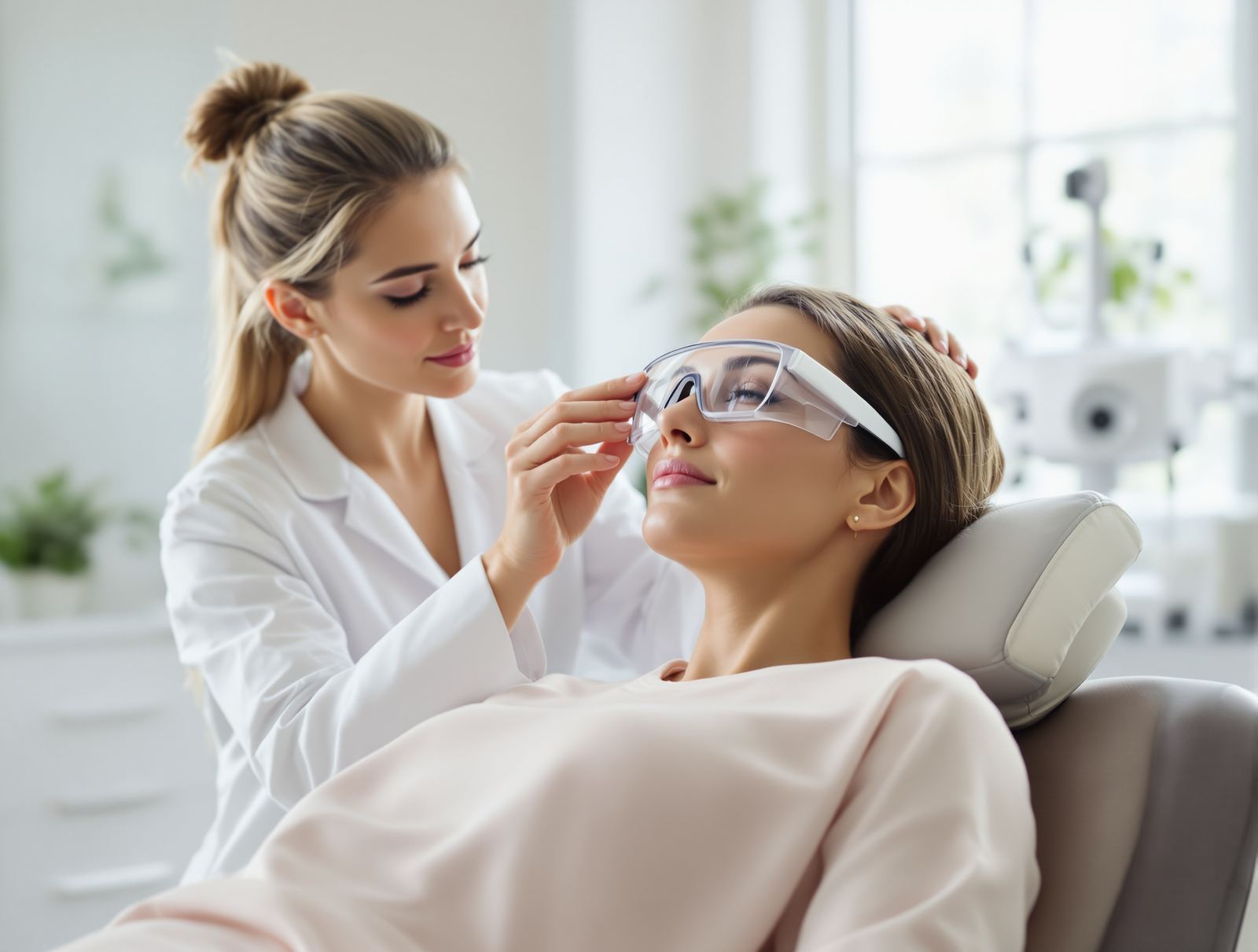
Walk down Bedford Drive and you can collect a different laser acronym from every lobby: CO2, erbium, Fraxel, Halo, BBL, Clear + Brilliant. The marketing implies these are interchangeable roads to the same destination. They are not. Each device injures skin in a specific way, and the injury is the treatment, so understanding the injury is the whole game.
The organizing principle: ablative versus non-ablative, full-field versus fractional. Every resurfacing laser can be placed on two axes. Ablative lasers vaporize the surface layer of skin; non-ablative lasers heat the deeper layers while leaving the surface intact. Full-field treatment covers every millimeter; fractional treatment drills microscopic columns and leaves the skin between them untouched, which is what makes healing faster. The American Academy of Dermatology describes this trade plainly: more injury generally means more collagen remodeling and more visible change, and also more downtime and more risk. Every brand name on the menu is just a position on that grid.
CO2: the heavy machinery. Fully ablative carbon dioxide resurfacing remains the most powerful single treatment for deep wrinkles, etched lines around the mouth, and significant sun damage. It is also the most serious commitment: a week or more of raw, weeping skin, weeks of redness, and a real requirement for surgical-grade aftercare. Fractional CO2 softens both the results and the recovery. In experienced hands the payoff can be dramatic, but this is the device where operator skill and patient selection matter most, because aggressive settings on the wrong skin can scar or permanently lighten it.
Erbium: precision over power. Erbium YAG ablates with less heat scatter than CO2, which means finer control, faster healing, and less prolonged redness, at the cost of less dramatic tightening. Dermatologic literature generally positions erbium as the gentler ablative choice for moderate texture and lines, and a reasonable option for patients who cannot disappear from work for two weeks.
Fraxel and the non-ablative fractional class. Fraxel is a brand that became a category, the way Kleenex did. Non-ablative fractional lasers heat columns of dermis without breaking the surface, so recovery is a few days of redness and swelling rather than open skin. The honest trade: you need a series, usually three to five sessions, and the change is incremental rather than cinematic. For early texture change, mild acne scarring, and maintenance in your forties, that trade is often exactly right.
BBL and IPL: not lasers at all. Broadband light and intense pulsed light are flash-lamp technologies, scattershot wavelengths rather than a single coherent beam. They excel at color problems, meaning redness and discrete sun spots, and do comparatively little for texture or wrinkles. They are frequently sold as resurfacing. They are not resurfacing. They also carry a specific caution this publication has covered before: light-based devices can provoke pigment rebound in melasma, a failure mode explained in why the wrong laser makes melasma worse.
The skin-tone question every consult should start with. All resurfacing risk scales with baseline pigment. Deeper skin tones carry a meaningfully higher risk of post-inflammatory hyperpigmentation with ablative and light-based devices, and a good practice will say so unprompted, choose conservative fractional settings or non-laser alternatives, and use test spots. A menu that quotes you a package price before examining your skin in person is answering a question nobody asked.
Downtime, stated plainly. Full-field CO2: seven to fourteen days off camera, redness for weeks after. Fractional CO2 or erbium: four to seven days. Non-ablative fractional: two to four days of swelling and bronzing per session. BBL and IPL: a day or two of flushing, with treated spots darkening before they flake. Any clinic quoting less is describing the best case as the average.
How to choose. Match the device to the complaint, not the promotion. Etched lines and heavy photoaging point toward ablative resurfacing done by someone senior. Early texture and maintenance point toward the non-ablative fractional class. Color complaints point toward light devices or, often more sensibly, topicals first, the unglamorous sequence laid out in what actually works for anti-aging in LA. And every one of these investments erodes without daily photoprotection, the discipline covered in our Southern California SPF routine. The laser is the expensive part. The sunscreen is the part that makes it last.
Related reading: What actually works for anti-aging in LA.
More in Explainer
View all →- RF Microneedling vs. Traditional Microneedling: What the Energy Actually Adds
- Why Melasma Often Gets Worse After Laser, and What Actually Works
- Ultrasound Before the Syringe: Why Beverly Hills Injectors Are Mapping Faces First
- Fillers That Fill vs. Fillers That Build: How Biostimulatory Injectables Actually Work