
Explainer · August 1, 2026 · 4 min · By Noor El-Amin
Dissolving Filler: What Hyaluronidase Actually Does, and What It Cannot Fix
Requests to reverse hyaluronic acid filler have climbed sharply in Beverly Hills practices. Here is the enzyme science behind dissolving, why results vary, and the questions to ask before anyone injects it.
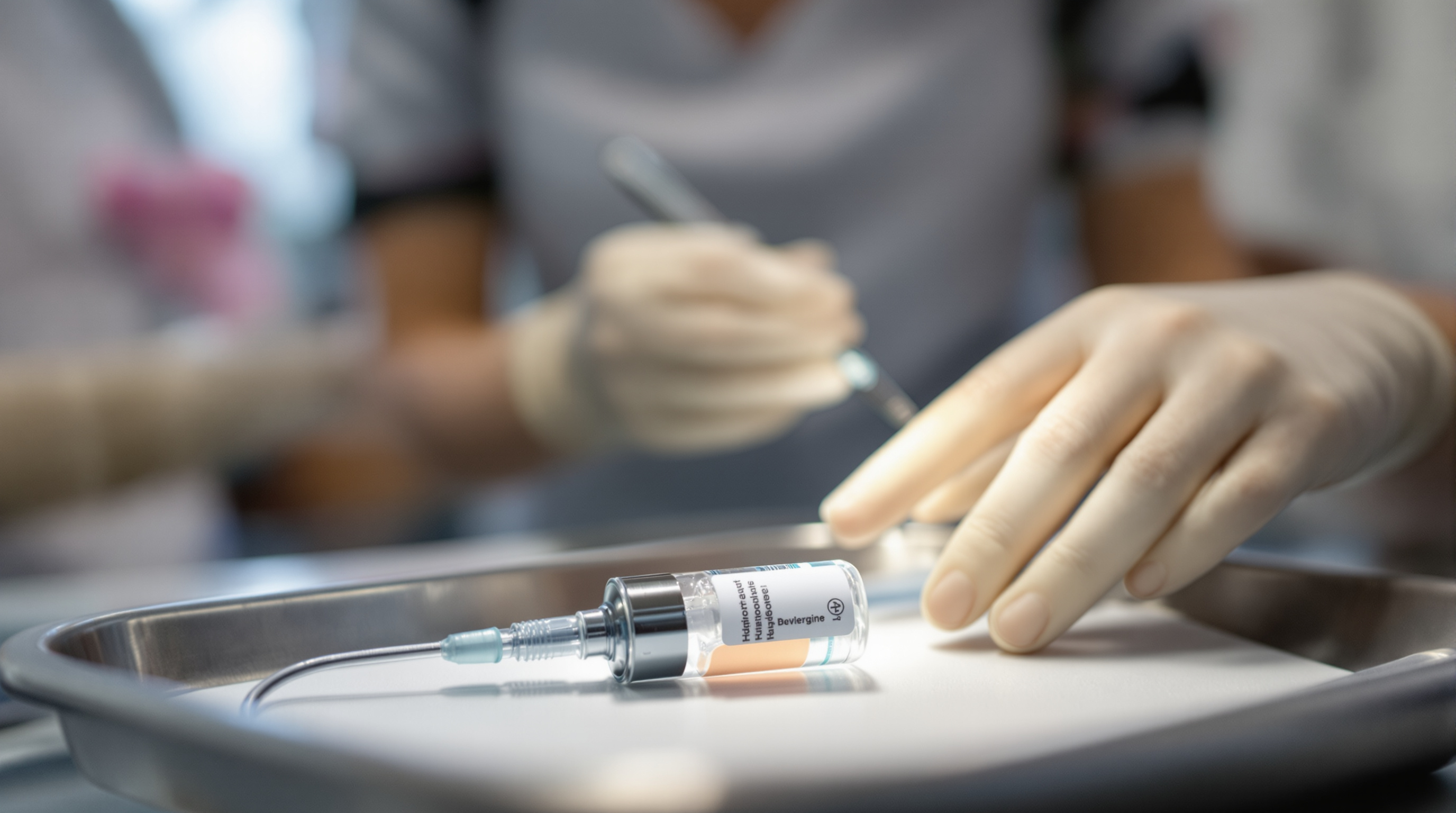
Walk into almost any dermatology practice in the 90210 corridor and you will hear a version of the same request: not more filler, but less. After a decade of enthusiastic hyaluronic acid injection, a meaningful share of consultations now involve patients asking to have old product dissolved, whether because of migration, puffiness, asymmetry, or a simple change in taste. The tool for that job is hyaluronidase, an enzyme that most patients have heard of and few genuinely understand.
What the enzyme actually does. Hyaluronidase breaks the glycosidic bonds that hold hyaluronic acid chains together. Injectable HA fillers are made of those same chains, cross-linked into a gel so they resist degradation and hold shape. When hyaluronidase is injected into or around a filler deposit, it cleaves the polymer into smaller fragments that the body clears through normal metabolic pathways. The effect begins within minutes and continues over roughly 24 to 48 hours. In the United States, the products used are typically recombinant human hyaluronidase or animal-derived formulations, both used off label for filler reversal.
Why some filler dissolves easily and some does not. Not all HA gels respond the same way. The degree and type of cross-linking matters. Densely cross-linked, high G prime fillers designed for structural work in the chin or jawline are more resistant to the enzyme than softer gels placed in the lips. Older product that has integrated into tissue, absorbed water, and spread over time can also behave unpredictably. This is why an experienced injector will often stage the process: dissolve conservatively, reassess at two weeks, and repeat if needed, rather than flooding an area in one visit.
The native tissue question. A common patient fear is that hyaluronidase will melt the face, dissolving the body's own hyaluronic acid and leaving skin deflated. The mechanism here is reassuring. Native HA in the skin turns over rapidly, with a half life measured in hours to a day or two, because the body continuously produces it. Any native HA broken down by the enzyme is replaced quickly. Cross-linked filler, by contrast, does not regenerate. That said, aggressive dosing can cause temporary volume loss and a briefly hollow appearance while native HA replenishes, which is one more argument for staged, conservative treatment.
Allergy is rare but real. Hyaluronidase is a protein, and true hypersensitivity reactions occur in a small minority of patients, more often with animal-derived formulations and in people with bee or wasp venom allergy, since venom contains related enzymes. For elective, non-urgent dissolving, many clinicians perform a small intradermal test dose and observe before proceeding. In a vascular emergency, when filler has compromised blood flow to skin or, rarely, the retina, that caution is set aside and high dose enzyme is given immediately, because tissue survival outweighs allergy risk.
What dissolving cannot do. Hyaluronidase only works on hyaluronic acid. It has no effect on calcium hydroxylapatite, poly-L-lactic acid, polymethyl methacrylate, or silicone. Patients with older permanent or semi-permanent product sometimes arrive expecting a quick enzymatic fix, and the honest answer is that those materials require different management, occasionally including surgical excision. The enzyme also cannot reverse tissue stretch. Lips or under eye areas that carried large filler volumes for years may not snap back fully once the product is gone, particularly in older patients with less elastic skin.
The migration conversation. Much of the current dissolving demand traces to so-called filler migration, most visibly in lips where product drifts above the vermilion border and creates a shelf-like ridge. The mechanism is usually mundane: repeated treatments layered over residual product, injection into or near muscle planes that push gel outward, and the simple fact that HA attracts water and expands over time. Imaging studies using ultrasound have shown filler persisting far longer than the 6 to 12 months once quoted on consent forms, sometimes for years. Dissolving before reinjecting, rather than stacking new product on old, has become a mark of careful practice.
Questions worth asking before you dissolve. First, is the practitioner confident the existing product is hyaluronic acid, and if records are unavailable, will they use ultrasound or a cautious test approach? Second, what is the plan for staging, and how long will they wait before refilling? Most clinicians recommend at least two weeks after the final dissolving session so swelling resolves and residual enzyme activity ends. Third, how do they handle a hypersensitivity reaction, and is emergency protocol in place?
The broader lesson from the dissolving boom is not that filler is bad. It is that HA filler's reversibility, long marketed as a safety feature, is real but not effortless. The enzyme works, the biology is sound, and in skilled hands correction is very achievable. It simply requires the same judgment, restraint, and anatomical knowledge that should have guided the original injection.
Related reading: Filler Fatigue: Why Beverly Hills Dermatologists Are Dissolving More Than They Inject.
More in Explainer
View all →- RF Microneedling vs. Traditional Microneedling: What the Energy Actually Adds
- Why Melasma Often Gets Worse After Laser, and What Actually Works
- Ultrasound Before the Syringe: Why Beverly Hills Injectors Are Mapping Faces First
- Fillers That Fill vs. Fillers That Build: How Biostimulatory Injectables Actually Work