
Explainer · August 4, 2026 · 4 min · By Noor El-Amin
Sculptra vs. Radiesse: How Beverly Hills Injectors Actually Choose Between the Two Biostimulators
Both products promise collagen instead of volume-for-volume filling. The mechanisms, timelines, and failure modes are different enough that the choice matters more than the marketing suggests.
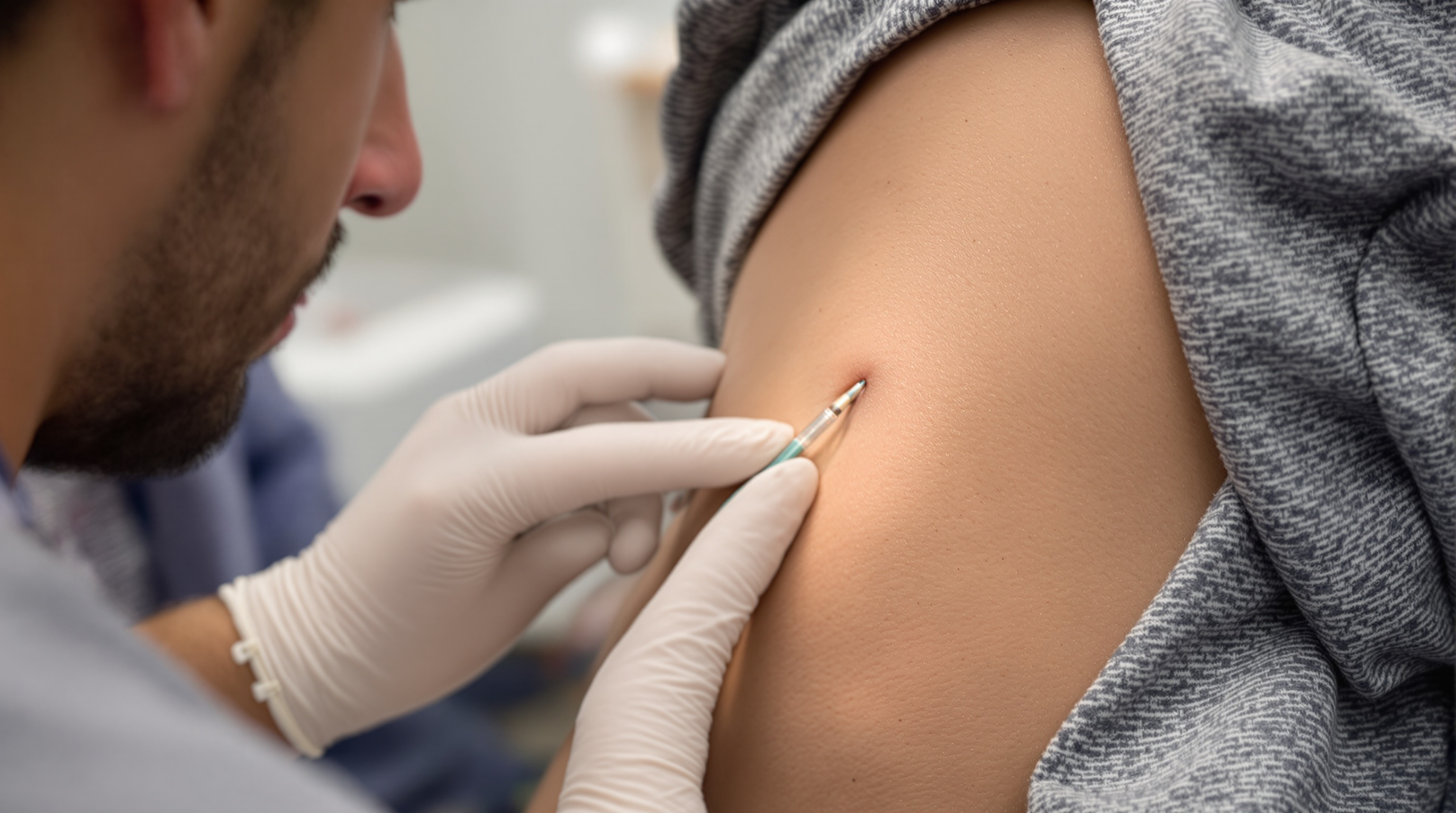
Walk into almost any aesthetic practice in the 90210 zip code and you will hear the word collagen within the first five minutes of a consultation. Two injectables carry most of that conversation: poly-L-lactic acid, sold as Sculptra, and calcium hydroxylapatite, sold as Radiesse. Both are classed as biostimulators, meaning the visible result comes primarily from your own tissue response rather than from the product sitting in place the way a hyaluronic acid gel does. That shared label hides real differences in chemistry, timeline, and appropriate use, and those differences explain why experienced injectors do not treat the two as interchangeable.
How poly-L-lactic acid works. PLLA is a biodegradable polymer, the same family of material used in dissolvable sutures for decades. It arrives as a powder, is reconstituted with sterile water, and is injected as a suspension of microparticles. The immediate plumping a patient sees in the mirror that day is mostly the water carrier, and it is gone within 48 to 72 hours. What happens next is the actual treatment: the microparticles trigger a controlled, low-grade foreign body response. Fibroblasts are recruited, and over roughly 8 to 12 weeks they deposit new type I collagen around the particles as the PLLA itself slowly hydrolyzes into lactic acid and is cleared. The clinical result is gradual, typically requiring two to three sessions spaced about six weeks apart, with results that studies have tracked out to two years or longer.
How calcium hydroxylapatite works. CaHA microspheres are made of the same mineral compound found in bone and teeth, suspended in an aqueous gel. Unlike PLLA, Radiesse gives a genuine day-one correction because the gel carrier itself provides volume. Over the following months the gel is absorbed, and the remaining microspheres act as a scaffold that stimulates fibroblast activity and neocollagenesis, along with some elastin production shown in histology studies. The net effect is a product that behaves like a filler on day one and like a biostimulator over months. Duration is commonly quoted at 12 to 18 months.
Where each one earns its keep. PLLA shines when the problem is diffuse volume loss and skin quality rather than a specific fold. Temples, the mid and lower cheeks, and increasingly off-face areas like the crepey skin of the arms, chest, and above the knees are common targets in Los Angeles practices, where patients often want a global refresh without a single area looking done. Because the effect builds slowly, it is nearly impossible for anyone to pinpoint when the treatment happened, which is exactly the appeal for camera-facing clients. CaHA, being denser and immediately volumizing, is favored for structural work: jawline definition, chin projection, nasolabial folds, and the back of the hands, where it holds FDA approval. Diluted or hyperdiluted CaHA has also become popular as a pure skin-quality treatment for the neck and body, blurring the line between the two products further.
The failure modes are not the same either. The classic PLLA complication is the delayed nodule or papule, historically linked to inadequate reconstitution and dilution. Modern protocols using higher dilution volumes, longer reconstitution times, and diligent post-treatment massage, often summarized as the rule of fives, five minutes of massage, five times a day, for five days, have pushed nodule rates well below early figures. CaHA's main cautionary note is different: it is radiopaque, meaning it shows up on X-rays and CT scans, which patients should disclose to radiologists, and unlike hyaluronic acid it cannot be dissolved with hyaluronidase. Sodium thiosulfate has been described as a partial off-label option for CaHA nodules, but reversibility is genuinely limited for both biostimulators. Neither product belongs in the lips or the immediate tear trough, and injectors who suggest otherwise deserve a second opinion.
The honest comparison for patients. If you want visible change today and are treating a defined structural area, CaHA fits the brief. If you are playing a longer game, tolerate a multi-session plan, and care more about overall firmness and light reflection than any single fold, PLLA is often the better tool. Many practices combine them across a face, or pair either one with hyaluronic acid for areas that demand precision and reversibility. Cost per session in the Beverly Hills market typically runs from about $800 to $1,500 per vial or syringe, and PLLA's multi-session protocol means total budgets frequently land higher than a single filler appointment, something worth clarifying before the first needle.
The takeaway is that biostimulator is a mechanism category, not a guarantee, and the two flagship products in it solve different problems on different clocks. A consultation that skips straight to a brand name without asking whether your goal is structure, surface quality, or both is a consultation worth extending.
Related reading: Sculptra vs. Radiesse: What Collagen Biostimulators Actually Do Under the Skin.
More in Explainer
View all →- RF Microneedling vs. Traditional Microneedling: What the Energy Actually Adds
- Why Melasma Often Gets Worse After Laser, and What Actually Works
- Ultrasound Before the Syringe: Why Beverly Hills Injectors Are Mapping Faces First
- Fillers That Fill vs. Fillers That Build: How Biostimulatory Injectables Actually Work