
Explainer · July 20, 2026 · 6 min · By Noor El-Amin
Microneedling with PRP in Beverly Hills: What the 'Vampire Facial' Actually Does
The blood-streaked selfie made it famous, but the vampire facial is really two procedures stacked together. Here is what microneedling and platelet-rich plasma each contribute, what the evidence supports, and the safety detail that matters more than the price.
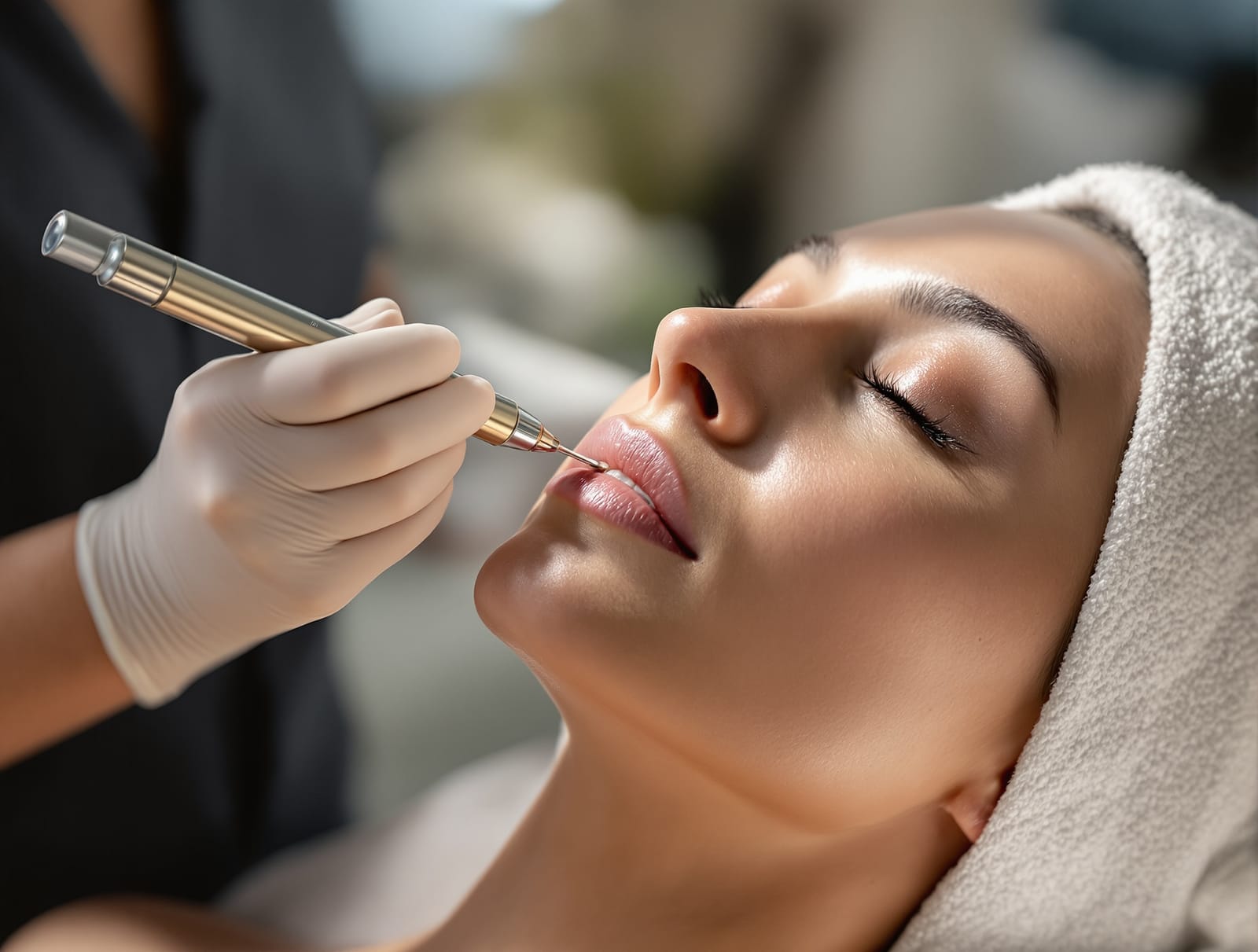
The vampire facial has one of the most memorable names in aesthetics and one of the most misunderstood mechanisms behind it. It became a cultural reference when a reality star posted a blood-streaked selfie, and in Beverly Hills it now appears on nearly every cosmetic menu, priced anywhere from a few hundred dollars to well over a thousand per session. The theatrical name hides a plain reality: the treatment is two separate procedures stacked together. The first is microneedling, which creates controlled micro-injuries in the skin. The second is platelet-rich plasma, or PRP, concentrated from a sample of your own blood and applied to those channels. Understanding what each part contributes is the only way to judge whether the premium version is worth the money.
What microneedling does on its own. Microneedling uses a device studded with fine needles to create thousands of tiny, uniform punctures in the skin, usually a fraction of a millimeter to a couple of millimeters deep. Each puncture is a controlled wound, and the skin responds the way it responds to any injury: it launches a repair cascade that recruits growth factors and prompts fibroblasts to lay down fresh collagen and elastin. The American Academy of Dermatology explains in its microneedling guidance that the procedure can gradually improve skin texture, acne scarring, and fine lines over a series of sessions, with results building over months rather than appearing overnight. Done alone, without any blood component, microneedling is already an evidence-supported tool for texture and scarring. That is the baseline the vampire facial is trying to beat.
Where the PRP comes in. Platelet-rich plasma is made by drawing a small vial of your blood and spinning it in a centrifuge to separate and concentrate the platelets. Platelets are not just clotting cells: they are packed with signaling proteins such as platelet-derived growth factor, vascular endothelial growth factor, and transforming growth factor beta, all of which orchestrate tissue repair. The theory of the vampire facial is elegant. Open thousands of microchannels with the needles, then flood them with a concentrate of your own healing signals so the collagen response runs harder and faster. In practice the PRP is either massaged across the freshly needled skin so it seeps into the channels, or injected into targeted areas. Because the plasma is autologous, meaning it comes from your own body, the allergy and rejection risks that come with foreign materials are essentially removed.
What the evidence actually shows. Here the honest picture is more modest than the marketing. Controlled studies, several of them split-face trials where one cheek gets microneedling plus PRP and the other gets microneedling alone, generally find that adding PRP produces a measurable but incremental improvement, most consistently for acne scarring and overall texture. The additive effect is real, not imaginary, but it is a refinement on an already useful base treatment, not a transformation. Expectations set at the level of the selfie will disappoint. Expectations set at gradual, cumulative improvement across a series of three or more sessions are the ones that tend to be met, which is the same evidence-over-ambience discipline worth applying across the entire anti-aging menu in LA.
The safety detail that matters more than the price. The autologous logic makes the vampire facial sound risk-free, and in a properly run clinic the safety profile is genuinely good. The danger is not the biology, it is the setting. In 2024 the Centers for Disease Control and Prevention documented a cluster of HIV infections traced to an unlicensed spa that offered vampire facials without proper infection control, the first known transmission of the virus through a cosmetic procedure of this kind. The lesson is not that the treatment is inherently unsafe, but that anything involving needles and blood demands surgical-grade sterile technique, single-use disposable needle cartridges, and blood handled only for the patient it came from. The microneedling devices themselves are regulated: the U.S. Food and Drug Administration classifies many of them as medical devices subject to specific clearance requirements, and the at-home rollers sold online are a different and far less predictable category. In a market as crowded with med-spas as this one, who holds the needle and how the room is run matter more than the brand on the menu.
Where PRP has firmer footing. The plasma component has arguably stronger evidence in a related use: the scalp. PRP injected into thinning areas is one of the more promising adjuncts for pattern hair loss, a subject this publication covered in what actually regrows hair. The protocols there are better studied than for the face, though still not fully standardized, which is a useful reminder that PRP is a tool with several applications rather than a single miracle facial.
Who is a reasonable candidate. The treatment suits people bothered by acne scarring, enlarged pores, uneven texture, or early fine lines who accept a series and a slow build. It is a poor fit for anyone wanting immediate volume, since it neither fills nor sculpts the way the injectables covered in our collagen banking explainer do. People on blood thinners, with active skin infections, certain blood disorders, or a tendency to keloid scarring should raise those factors before booking, because the entire mechanism depends on a normal wound-healing response.
How to vet a Beverly Hills provider. Ask who performs the procedure and whether a physician is on site. Ask to confirm that needle cartridges are single-use and that blood is processed and labeled for you alone. Ask how many sessions the plan assumes and what the realistic result looks like, since a provider promising dramatic change from one visit is selling the name rather than the science. And ask what the plan is if the skin reacts badly, because a competent practice has an answer ready.
The bottom line. The vampire facial is microneedling, a proven texture treatment, given a modest boost by a concentrate of your own healing proteins. The added benefit is real but incremental, the theatrical branding oversells it, and the single most important variable is not the product but the sterility and skill of the room you are in. Buy the technique and the safety, not the selfie.
Related reading: What actually regrows hair in Beverly Hills.
More in Explainer
View all →- RF Microneedling vs. Traditional Microneedling: What the Energy Actually Adds
- Why Melasma Often Gets Worse After Laser, and What Actually Works
- Ultrasound Before the Syringe: Why Beverly Hills Injectors Are Mapping Faces First
- Fillers That Fill vs. Fillers That Build: How Biostimulatory Injectables Actually Work