
Explainer · July 23, 2026 · 6 min · By Noor El-Amin
Chemical Peels in Beverly Hills: How to Choose Peel Depth Before You Book
The depth a peel reaches, not the acid on its label, decides both your result and your downtime, and most people book the wrong one because no one hands them a way to match the two.
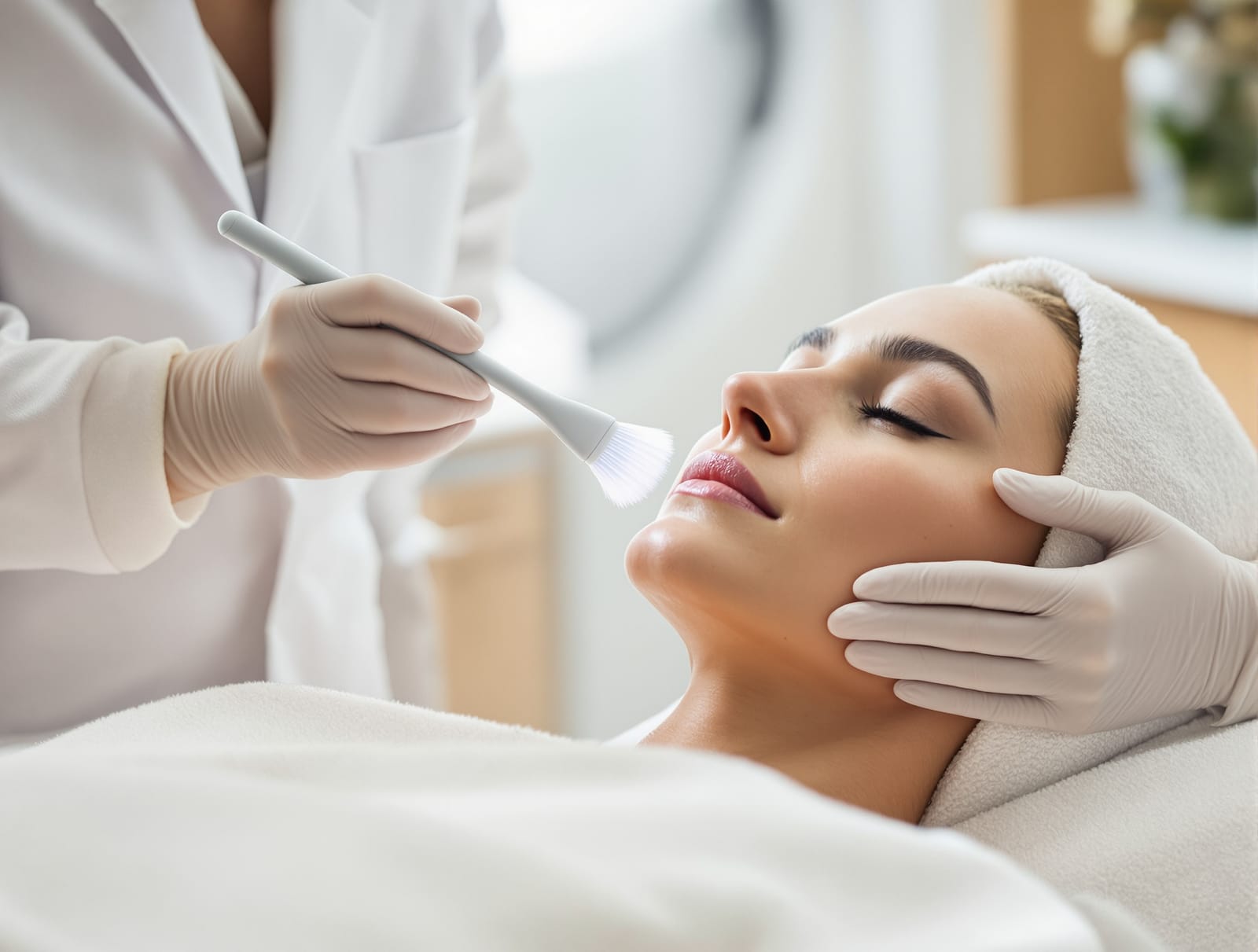
Walk into a Beverly Hills medical spa asking for a peel and you are handed a menu that reads like a chemistry final: glycolic, lactic, salicylic, Jessner, TCA, phenol, each at three or four strengths. The staff asks which one you want. Almost no one can answer that honestly, because the brand and the acid are not what decides your result. The depth the peel reaches is. A patient who books by name instead of by depth is the one who takes two weeks of downtime for a problem a lunch-hour peel would have solved, or the reverse, three gentle peels that were never going to touch the pigment they came in for.
So here is the original tool this article exists to hand you, and it appears on no clinic price list: a three-question peel-depth decision aid you can run at your bathroom mirror tonight, before any consult, that maps your main concern, your downtime budget, and your skin tone to the depth that actually fits. Read the three depths first, then run the questions.
Superficial peels work only in the epidermis, the outermost layer. These are your glycolic and salicylic acid peels at low concentrations and light Jessner passes. They brighten dull skin, soften early fine lines, and help with mild acne and clogged pores. Downtime is a day or two of light flaking that makeup covers. The catch is that one superficial peel does almost nothing measurable; they work as a series of six or more, spaced two to four weeks apart, at the lightest end of the chemical peel spectrum the American Academy of Dermatology describes.
Medium-depth peels reach through the epidermis into the upper dermis, usually with trichloroacetic acid, often called TCA, at around 35 percent, or a Jessner-plus-TCA combination. This is the depth that genuinely improves moderate sun damage, uneven pigment, and shallow acne scars. Expect five to seven days of visible peeling, redness, and a stretch of hiding indoors. One well-performed medium peel can do what a stack of superficial peels cannot, which is why matching depth to concern matters more than the acid on the label.
Deep peels, classically phenol with croton oil, reach the mid dermis and are the closest a chemical peel comes to surgical resurfacing. They address deep wrinkles and heavy sun damage in a single treatment, but the tradeoff is real: two weeks or more of intensive recovery, cardiac monitoring during the procedure because phenol can affect the heart, and permanent loss of the skin's ability to tan in the treated area. Deep peels are uncommon now and overlap heavily with what a laser resurfacing session achieves, so choosing between them is a real consultation topic, not a menu pick.
Now the decision aid. First, name your single main concern and be honest about how deep it sits. Dullness, mild breakouts, and rough texture live at the surface, so they point to superficial. Brown patches, blotchy sun damage, and shallow acne scars sit deeper, so they point to medium. Deep, etched wrinkles point to a deep peel or a laser, not to anything you can talk a spa into as an add-on. If your concern is melasma specifically, stop and read our melasma guide first, because aggressive peels can worsen it.
Second, count the recovery days you can actually spend. If you have none, you are choosing a superficial peel and committing to the series; a single light peel before an event does very little. If you can hide for a week, medium depth is on the table and is usually the highest-value single treatment. If you can disappear for two weeks and want a monitored consult, a deep peel enters the conversation. Booking a depth your calendar cannot support is how people end up visibly peeling at a wedding.
Third, check your skin tone against the risk, because this is where the marketing goes quiet. Deeper skin, roughly Fitzpatrick types IV through VI, carries a meaningfully higher risk of post-inflammatory hyperpigmentation, meaning the peel can leave darker marks than the ones it was meant to erase. Superficial peels are generally safe across tones; medium and deep peels in richer skin demand an experienced provider, pretreatment, and often a more conservative depth. Here is what the studies do not tell you cleanly: much of the peel-depth research was done in lighter skin, so the precise safe ceilings for medium peels in skin of color remain under-defined. The StatPearls review names hyperpigmentation as a key complication but cannot give you a tidy per-tone rule, because the evidence base does not contain one yet. Treat any confident depth promise for deeper skin as a reason to ask more questions, not fewer.
Whatever depth you land on, two things move the result more than the acid brand. Pretreatment with a prescription retinoid for several weeks primes the skin and speeds healing, though you stop it a few days before the peel. And rigorous sun protection afterward is not optional; fresh post-peel skin burns and pigments easily, so daily broad-spectrum SPF is what protects the money you just spent, a point the AAD makes plainly in its sunscreen guidance.
The takeaway is small and it will save you a wasted booking: walk into the consult naming a depth, not a brand. Say you want superficial maintenance, or a single medium-depth correction, or a conversation about deep resurfacing, and let the provider choose the specific acid to get you there. The clinics worth your money respect a patient who arrives speaking their real language. The ones that only upsell the trendiest-named peel on the wall have told you something useful too.
More in Explainer
View all →- RF Microneedling vs. Traditional Microneedling: What the Energy Actually Adds
- Why Melasma Often Gets Worse After Laser, and What Actually Works
- Ultrasound Before the Syringe: Why Beverly Hills Injectors Are Mapping Faces First
- Fillers That Fill vs. Fillers That Build: How Biostimulatory Injectables Actually Work