
Explainer · July 25, 2026 · 4 min · By Noor El-Amin
Radiofrequency Microneedling vs. Traditional Microneedling: What the Depth and Heat Actually Change
Both devices puncture the skin to trigger repair, but adding radiofrequency energy changes the target tissue, the downtime, and who benefits. Here is the mechanism-level breakdown patients rarely get in a consult.
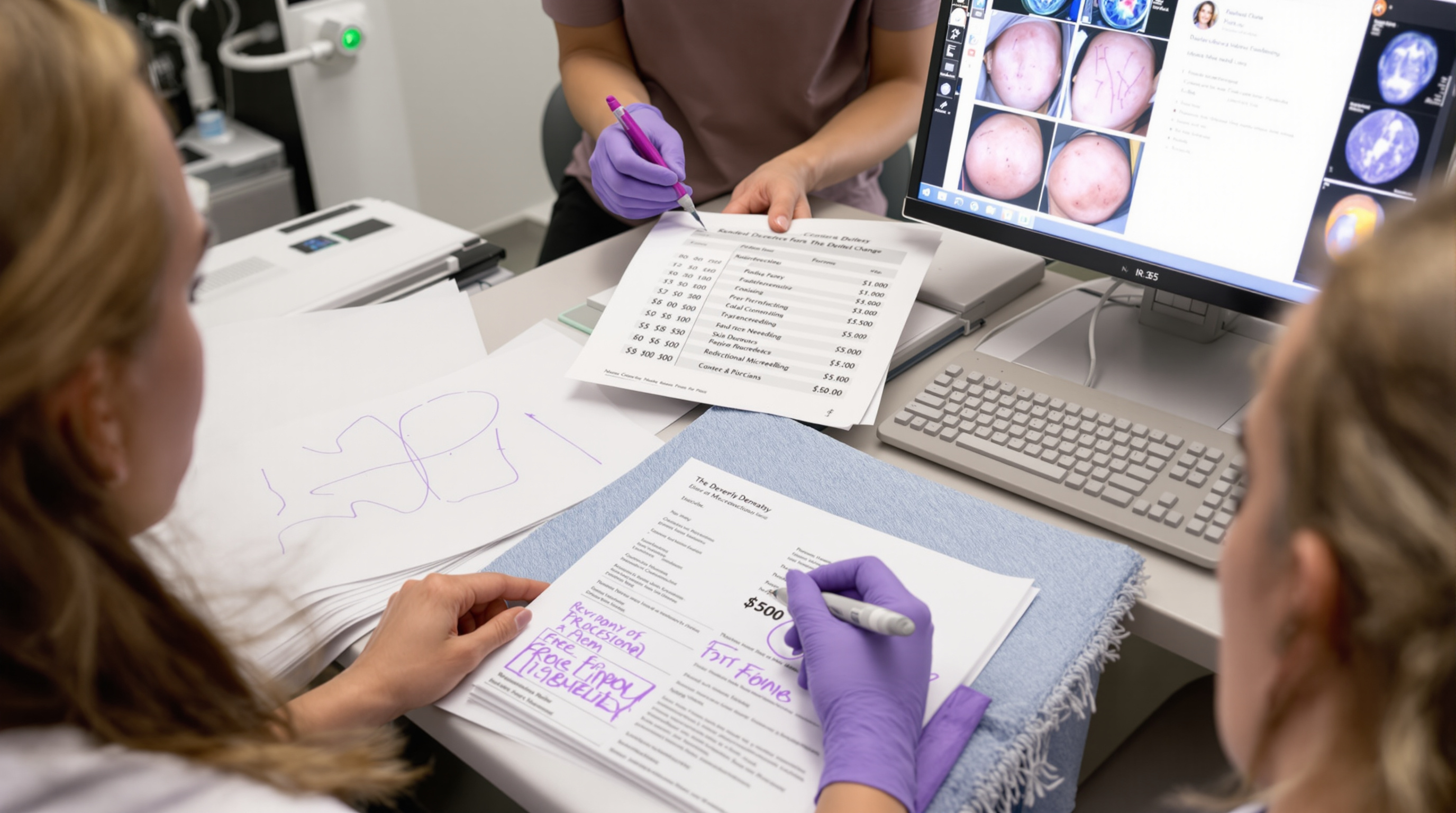
Walk into almost any dermatology practice in the 90210 zip code and you will find at least one microneedling device on the menu, and increasingly two: a traditional needling pen and a radiofrequency (RF) microneedling platform. The second option typically costs two to four times more per session. Patients are often told it is simply the stronger version. That framing is not quite right, and understanding why comes down to where each device deposits its injury and what kind of repair that injury provokes.
How traditional microneedling works. A standard microneedling pen uses fine needles, usually 0.5 to 2.5 millimeters long, to create thousands of controlled micro-punctures in the epidermis and superficial dermis. The mechanism is purely mechanical. Each channel triggers a localized wound-healing cascade: platelets release growth factors, fibroblasts migrate in, and over four to six weeks new collagen (initially type III, remodeling toward type I) is laid down. Because the injury is shallow and cold, the response is concentrated in the papillary dermis. That makes traditional needling best suited to surface concerns: fine lines, mild acne scarring, enlarged pores, and overall texture. It also creates temporary channels that increase topical absorption, which is why it is often paired with serums or platelet-rich plasma.
What radiofrequency adds. RF microneedling uses needles as electrodes. The needles penetrate, often deeper, commonly 1 to 4 millimeters depending on the platform and setting, and then deliver an electrical current that heats the surrounding tissue to roughly 60 to 70 degrees Celsius at the needle tips. That temperature range matters. It is the threshold at which collagen fibers denature and contract, producing an immediate tightening effect, and at which heat-shock proteins trigger a more robust and prolonged neocollagenesis response than mechanical injury alone. Many devices use insulated needles, meaning the shaft is coated so heat is delivered only at the tip, deep in the dermis, while the epidermis is largely spared thermal exposure.
The practical consequence: RF microneedling reaches the mid and deep dermis and, at aggressive settings, the fibrous septae of the superficial fat layer. This is why it is marketed for skin laxity along the jawline, crepey texture on the neck, and deeper rolling acne scars, targets that a 1.5 millimeter cold needle simply cannot remodel effectively.
The honest comparison. For texture and superficial scarring, well-performed traditional microneedling over a series of three to six sessions produces respectable results at a fraction of the cost, and multiple split-face studies show meaningful improvement in mild acne scarring with needling alone. For laxity, RF has a genuine mechanistic advantage, because tightening requires thermal collagen contraction, not just new collagen deposition. No amount of cold needling replicates that.
That said, RF microneedling is not a facelift alternative, and this is where marketing frequently outruns evidence. Published improvement in laxity is typically described as mild to moderate, and results depend heavily on baseline skin quality, age, and the number of sessions, usually two to four spaced about a month apart. Patients with significant jowling or true tissue descent are anatomically beyond what dermal heating can correct, since the problem involves ligament laxity and volume loss, not just dermal quality.
Downtime and risk differ too. Traditional microneedling produces redness for one to three days. RF microneedling adds heat, so expect swelling, occasional pinpoint scabbing at needle sites, and redness lasting three to seven days at deeper settings. One underappreciated point favors RF in medium and darker skin tones: because insulated needles bypass the epidermis, the melanocyte-rich basal layer receives less thermal stress than it would from resurfacing lasers, making RF microneedling one of the safer energy-based options for Fitzpatrick types IV to VI. It is not risk-free, however. Post-inflammatory hyperpigmentation can still occur, and non-insulated needle systems carry more epidermal heat exposure. Grid-like marking, a temporary pattern of the needle array, has been reported when energy settings are too aggressive for the treatment depth.
Questions worth asking before booking. Ask which specific device is being used and whether its needles are insulated. Ask the planned depth settings for your concern, since a provider treating neck laxity at 1 millimeter is unlikely to deliver results. Ask who performs the treatment, because in California, energy-based device treatments involve physician oversight rules, and depth and energy decisions are genuinely clinical judgments. Finally, ask what outcome is realistic in millimeter terms: modest tightening and texture improvement, yes; surgical-grade lifting, no.
The short version: traditional microneedling remodels the surface, RF microneedling remodels the structure underneath it, and the right choice depends on whether your concern is texture or laxity, not on which machine has the bigger price tag.
Related reading: Chemical Peels in Beverly Hills: How to Choose Peel Depth Before You Book and Microneedling with PRP in Beverly Hills: What the 'Vampire Facial' Actually Does.
More in Explainer
View all →- RF Microneedling vs. Traditional Microneedling: What the Energy Actually Adds
- Why Melasma Often Gets Worse After Laser, and What Actually Works
- Ultrasound Before the Syringe: Why Beverly Hills Injectors Are Mapping Faces First
- Fillers That Fill vs. Fillers That Build: How Biostimulatory Injectables Actually Work